
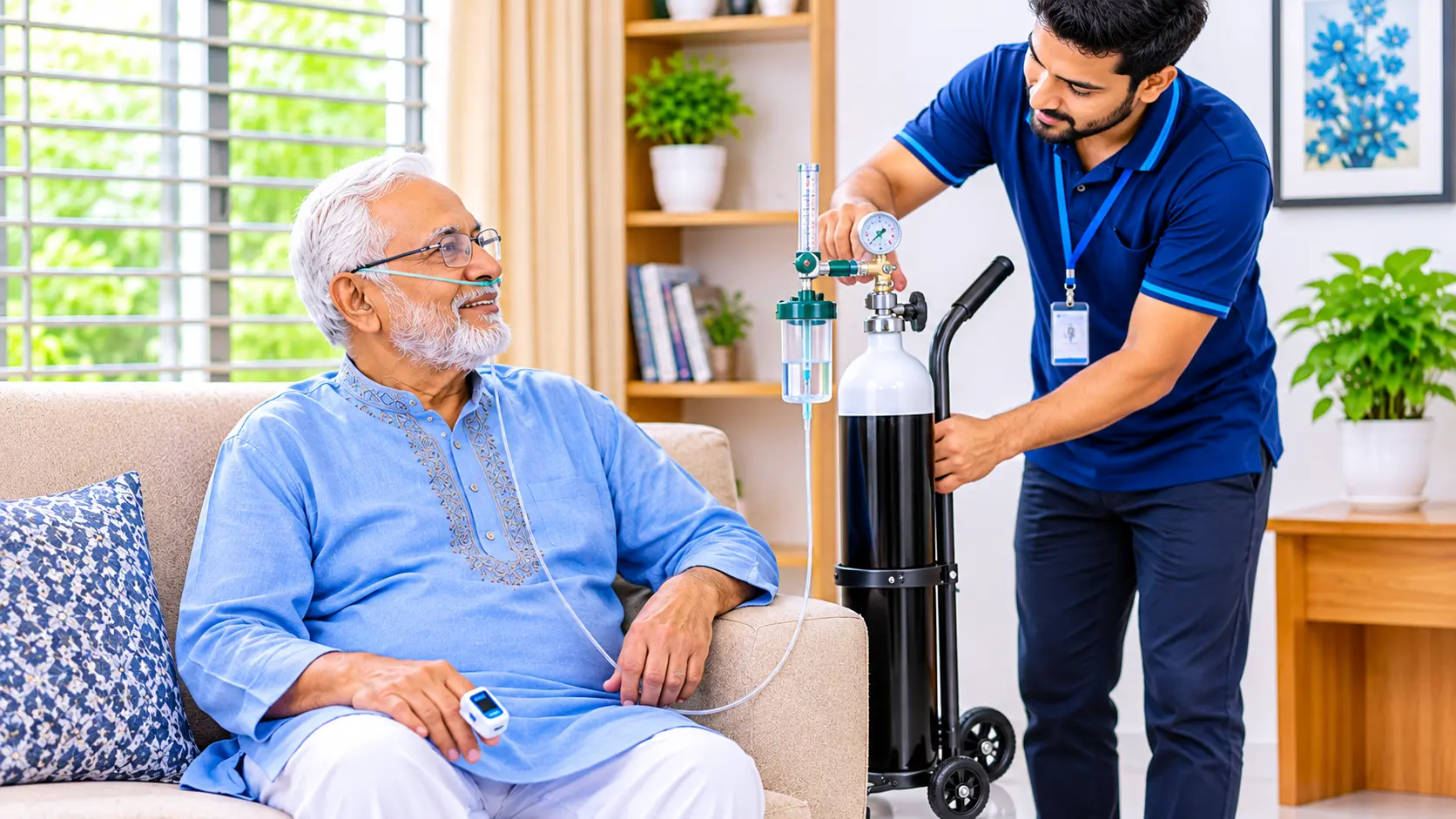
How to Use an Oxygen Cylinder at Home: Step-by-Step Guide
Quick answer: To use an oxygen cylinder at home, place it upright on a stable stand, away from flames and heat. Attach the regulator and flowmeter, fill the humidifier bottle with clean water, and connect a nasal cannula or mask. Then open the cylinder valve slowly and set the flow rate (liters per minute) prescribed by your doctor. Smoking, open flames, and oil or grease must be kept away from the cylinder at all times.
Important: Oxygen is a medical treatment. Do not start oxygen or change the flow rate without a doctor’s advice.
What Is an Oxygen Cylinder?
An oxygen cylinder is a metal container filled with pure medical-grade oxygen under high pressure. It is used to give extra oxygen to people who have trouble breathing or whose blood oxygen level is low.
Why Is Oxygen Therapy Needed at Home?
When lung or heart problems lower blood oxygen, the body’s organs cannot work properly. Many patients still need oxygen support after leaving the hospital. In these cases, doctors may advise continuing oxygen therapy at home.
Who Needs an Oxygen Cylinder at Home?
A doctor may recommend home oxygen for people with:
- COPD and chronic bronchitis
- Severe asthma
- Pneumonia or post-COVID lung complications
- Heart failure
- Pulmonary fibrosis
- Elderly or frail patients whose SpO₂ drops
A normal SpO₂ (oxygen saturation) is usually 95% or above. Be alert if it falls below 94%, inform your doctor if it falls below 92%, and seek urgent medical care if it falls below 90%.
What Are the Benefits of Using an Oxygen Cylinder at Home?
- Less breathlessness and more comfort
- Stable blood oxygen levels
- Fewer hospital visits
- Easier sleep and daily activities
- Quick support in an emergency
What Equipment Is Needed to Use an Oxygen Cylinder?
| Equipment | Purpose |
|---|---|
| Oxygen cylinder | Stores the oxygen |
| Regulator (with pressure gauge) | Controls pressure and shows how much gas is left |
| Flowmeter | Sets the flow in liters per minute |
| Humidifier bottle | Adds moisture to the oxygen |
| Oxygen tubing | Connects the equipment |
| Nasal cannula or mask | Delivers oxygen to the patient |
| Trolley or stand | Keeps the cylinder upright and safe |
| Pulse oximeter | Measures SpO₂ and pulse |
How to Set Up an Oxygen Cylinder at Home
- Place the cylinder upright on a stand or trolley in an open, well-ventilated area.
- Check that there are no flames, stoves, heaters, or electrical sparks nearby.
- Wipe dust from the cylinder outlet. Never apply oil or grease.
- Fit the regulator firmly onto the cylinder outlet.
- Attach the humidifier bottle to the flowmeter. Fill it with clean water up to the marked line (distilled water is usually best, but follow your doctor’s or supplier’s advice).
- Connect one end of the tubing to the humidifier outlet and the other end to the nasal cannula or mask.
How to Turn On an Oxygen Cylinder
- Make sure the flowmeter knob is closed.
- Open the cylinder valve slowly. Never open it suddenly or forcefully.
- Check the pressure gauge to see how much gas is in the cylinder.
- Turn the flowmeter knob to set the flow rate prescribed by your doctor.
- Look for bubbles in the humidifier. This shows oxygen is flowing.
- Then place the cannula or mask on the patient.
How to Adjust the Oxygen Flow Rate
Turn the flowmeter knob until the ball inside lines up with the prescribed liters-per-minute mark. Read it at eye level, and follow the device instructions on whether to read the center or top of the ball. Never set it higher or lower than your doctor’s prescription.
What Is the Normal Oxygen Flow Rate for Home Use?
A nasal cannula typically uses 1–4 liters per minute, and a face mask typically uses 5–10 liters per minute. The correct rate depends on the patient’s condition and is set by a doctor. Too much oxygen can be harmful for COPD patients, so never increase the flow on your own.
How to Use an Oxygen Mask or Nasal Cannula
Nasal cannula: Place the two prongs in the nostrils, loop the tubing over the ears, and gently secure it under the chin. It is comfortable for low to moderate flow.
Face mask: Cover the nose and mouth and fit the elastic band behind the head. The mask should be snug but not press too hard.
How Many Hours Can You Use an Oxygen Cylinder?
It depends on the cylinder size, the pressure inside, and the flow rate.
Formula: Duration (minutes) = Total oxygen in the cylinder (liters) ÷ Flow rate (liters per minute)
Example: A cylinder holding 1,500 liters at 2 liters per minute lasts 1,500 ÷ 2 = 750 minutes, or about 12.5 hours. A higher flow rate shortens the time.
How to Check the Oxygen Level in a Cylinder
Look at the regulator’s pressure gauge. On a full cylinder, the needle is near the maximum mark. When it drops into the red zone, the cylinder is almost empty, so arrange a replacement right away.
How to Know When an Oxygen Cylinder Is Empty
- The gauge needle is at zero or in the red zone
- The ball in the flowmeter drops
- No bubbles appear in the humidifier
- The patient’s breathlessness returns
How to Refill an Oxygen Cylinder
You cannot refill a cylinder yourself. Take the empty cylinder to a licensed oxygen supplier or gas plant. They check the cylinder’s test date and condition during refilling. Always arrange a replacement before the current cylinder runs out.
How to Store an Oxygen Cylinder Safely at Home
- Always keep the cylinder upright, secured with a stand or chain
- Keep it away from direct sunlight and heat
- Keep it at least 5 feet (about 1.5 meters) from kitchens, stoves, heaters, and electrical connections
- Store it in a dry, well-ventilated place
- Keep the valve closed when not in use
What Are the Safety Precautions When Using an Oxygen Cylinder?
- No smoking, candles, incense, matches, or open flames near the cylinder
- Never put oil, grease, cream, or petroleum jelly on the valve or regulator
- Avoid dropping or knocking the cylinder
- Do not touch electrical devices with wet hands
- Make sure everyone in the household knows the safety rules
- Keep emergency numbers and your doctor’s contact details nearby
What Should You Avoid While Using an Oxygen Cylinder?
- Smoking and open flames
- Oil-based products or alcohol-based sprays near the nose
- Increasing or decreasing the flow without a doctor’s approval
- Laying the cylinder on its side
- Using cracked or leaking tubing
Can You Sleep While Using an Oxygen Cylinder?
Yes, if your doctor recommends it, you can use oxygen while sleeping. Make sure the tubing does not wrap around the neck. Keep the cylinder upright at a safe distance from the bed.
Can You Use an Oxygen Cylinder Without a Concentrator?
Yes. A cylinder is an independent oxygen source, so you do not need a concentrator. You do need a regulator and a flowmeter. A concentrator makes oxygen from room air using electricity, while a cylinder holds pre-filled oxygen. During power cuts, a cylinder works well as a backup.
What Are the Common Problems With Oxygen Cylinders?
- Gas leaks or a hissing sound
- Regulator or flowmeter not working properly
- No bubbles in the humidifier
- Kinked or blocked tubing
- Dry or irritated nose
What Should You Do If an Oxygen Cylinder Stops Working?
- Check that the cylinder valve is open and the flowmeter is on.
- Check for kinked or disconnected tubing.
- Check the pressure gauge to confirm there is gas left.
- If you suspect a leak, close the valve, open the windows, and do not use flames or electrical switches.
- If the patient’s breathing worsens, call the doctor immediately or go to emergency care.
How to Maintain an Oxygen Cylinder at Home
- Change the humidifier water daily and keep the bottle clean
- Clean the nasal cannula or mask regularly and replace it when needed
- Replace tubing that is cracked or stiff
- Keep the regulator and valve dry and free of dust
- Have the cylinder inspected regularly through your supplier
Is It Safe to Use an Oxygen Cylinder at Home?
Yes, it is safe when used correctly and under a doctor’s guidance. The main risks are fire and incorrect flow rates, so follow the safety rules carefully.
What Are the Side Effects of Oxygen Therapy?
- Dry nose and throat
- Mild nosebleeds
- Headache and tiredness
- Drowsiness or slow breathing from too much oxygen (especially in COPD patients)
When Should You Contact a Doctor While Using Oxygen at Home?
Seek urgent medical help if you notice any of these:
- SpO₂ stays below 90% even with oxygen
- Blue or grayish lips or nails
- Sudden worsening of breathlessness
- Chest pain or pressure
- Extreme drowsiness, confusion, or fainting
- A cylinder leak or any other dangerous problem
Quick Guide for Beginners
- Get the prescribed flow rate from your doctor.
- Place the cylinder upright in a safe spot.
- Attach the regulator, flowmeter, and humidifier.
- Open the cylinder valve slowly.
- Set the flow rate.
- Put on the cannula or mask.
- Check SpO₂ regularly.
- When finished, close the cylinder valve, let the remaining gas in the line escape, then turn the flowmeter knob to zero.
Summary
Using an oxygen cylinder at home comes down to correct setup, the flow rate prescribed by your doctor, and strict safety. Keep the cylinder upright and away from fire, check the pressure gauge to know how much gas remains, and measure SpO₂ regularly. If breathing problems or complications arise, consult a doctor without delay.
Frequently Asked Questions About Using an Oxygen Cylinder at Home
How do I properly use an oxygen tank at home?
Place the tank upright on a stable stand, attach the regulator and flowmeter, and connect the humidifier and nasal cannula or mask. Next, open the valve slowly and set the flow rate your doctor prescribed. Finally, check your SpO₂ regularly and keep the tank away from flames.
Can I use an oxygen cylinder at home?
Yes, you can use an oxygen cylinder at home if a doctor has prescribed oxygen therapy. However, never start oxygen or change the flow rate on your own. Also, make sure you have a regulator, a flowmeter, and a safe, well-ventilated place to keep the cylinder.
How long will 10 litres of oxygen last?
A 10-litre cylinder filled to normal pressure holds about 1,500 litres of oxygen gas. At 2 litres per minute, it lasts about 12.5 hours. For example, at 4 litres per minute it lasts about 6 hours, and at 10 litres per minute about 2.5 hours. The exact time depends on the pressure inside.
How to use oxygen safely at home?
Keep the cylinder upright, secured, and at least 5 feet (1.5 meters) from stoves, heaters, and electrical sources. In addition, never smoke or light flames nearby, and never apply oil, grease, or petroleum jelly to the valve. Moreover, always follow your doctor’s prescribed flow rate.
What are the side effects of using oxygen at home?
Common side effects are a dry nose and throat, mild nosebleeds, headache, and tiredness. Too much oxygen can cause drowsiness or slow breathing, especially in COPD patients. Therefore, use only the prescribed flow rate. If side effects continue, contact your doctor.
How to use an oxygen cylinder at home step by step?
First, place the cylinder upright in a ventilated area. Next, fit the regulator and flowmeter, then fill the humidifier bottle with clean water. After that, connect the tubing and cannula or mask, open the valve slowly, and set the prescribed flow rate. Finally, put the cannula or mask on the patient.
How many hours a day should you use oxygen?
The number of hours depends entirely on your doctor’s prescription. For example, patients on long-term oxygen therapy for chronic lung disease are often advised to use it for at least 15 hours a day, including during sleep. Never reduce or increase your daily hours without medical advice.
Are oxygen cylinders 100% oxygen?
Medical oxygen cylinders contain almost pure oxygen, usually 99% or higher. However, the patient does not breathe 100% oxygen. The oxygen mixes with room air as it is delivered, so a nasal cannula typically provides about 24–44% oxygen, depending on the flow rate.
What does breathing 100% oxygen feel like?
For a short time, breathing pure oxygen usually feels normal, though it may dry the nose and throat. Normal air contains only about 21% oxygen. Breathing high concentrations for long periods can harm the lungs, so use oxygen only under medical supervision.
