
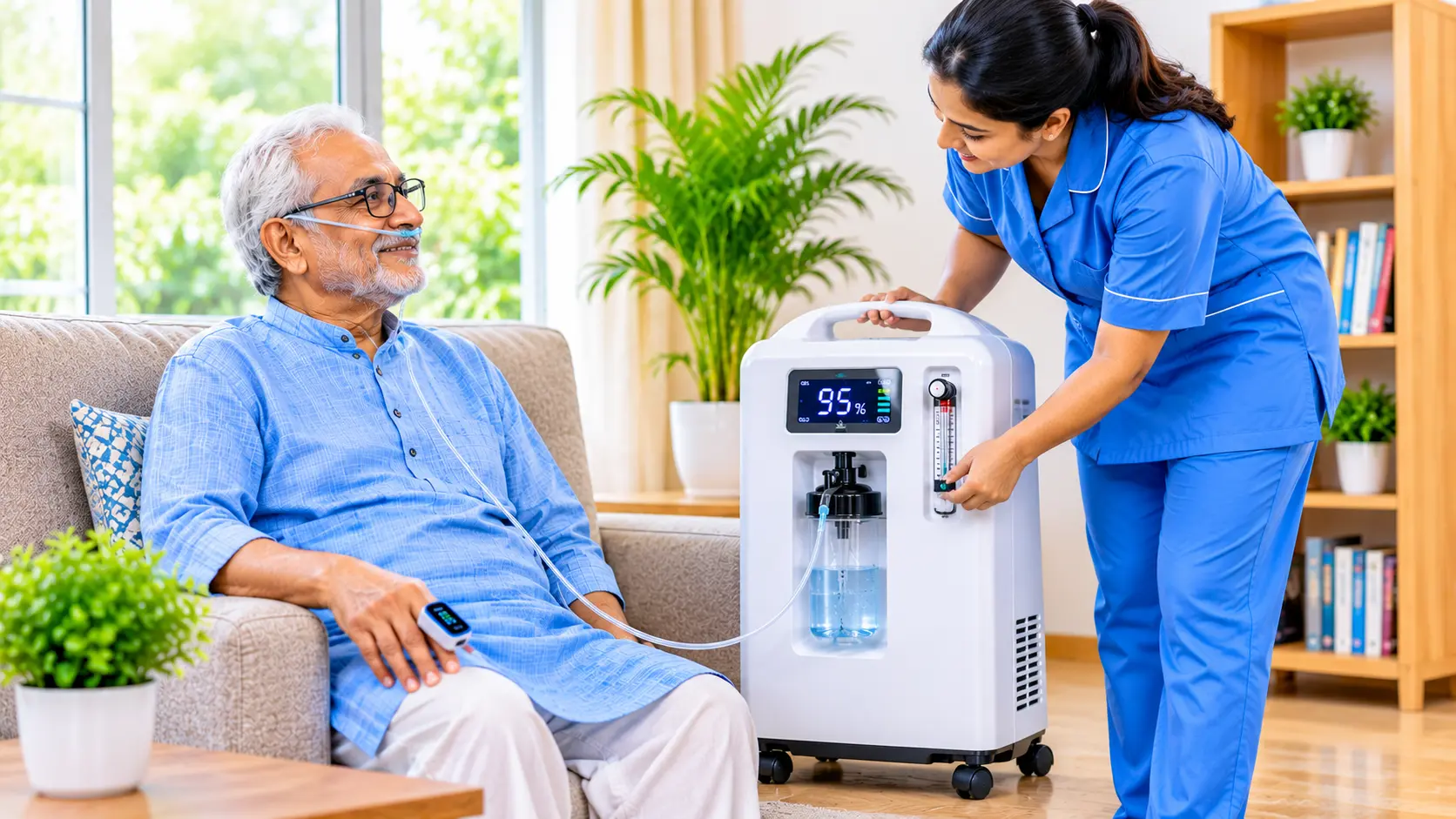
How to Use an Oxygen Concentrator at Home: A Complete Guide
An oxygen concentrator is a medical device that provides supplemental oxygen by separating oxygen from the surrounding air. To use an oxygen concentrator at home, follow the instructions provided by your healthcare professional and the device manufacturer. Always use the prescribed oxygen flow rate, keep the machine in a well-ventilated area, and follow essential safety precautions.
Important: Oxygen therapy is a medical treatment. Never start oxygen therapy, change the flow rate, or adjust the prescribed duration without guidance from a qualified healthcare professional.
What Is an Oxygen Concentrator and How Does It Work?
An oxygen concentrator is an electrically powered medical device that takes in room air, removes much of the nitrogen, and delivers concentrated oxygen through a nasal cannula or compatible oxygen mask.
Unlike an oxygen cylinder, which stores compressed oxygen, a concentrator produces concentrated oxygen from the surrounding air while it has a suitable power supply.
Most home oxygen concentrators include:
- A power switch and digital display
- Oxygen flow control
- Flow meter
- Air intake filters
- Oxygen outlet
- Humidifier bottle, if required by the prescribed setup
- Alarm indicators for certain operating problems
How to Use an Oxygen Concentrator at Home?
To use an oxygen concentrator at home, first make sure the device is suitable for the patient’s prescription and has been checked by the supplier. Follow the manufacturer’s instructions and the training provided by the healthcare professional.
Step 1: Choose a Suitable Location
Place the oxygen concentrator in a clean, dry, and well-ventilated room.
Remember to:
- Keep the air intake and ventilation openings unobstructed.
- Avoid placing the machine inside a cupboard or enclosed space.
- Keep it away from curtains, furniture, and anything that blocks airflow.
- Place it on a stable, level surface.
- Keep the device away from heat sources and open flames.
Step 2: Check the Device Before Use
Before using the concentrator, check that:
- The power cable and plug appear undamaged.
- The air intake area is not blocked.
- The filters are maintained according to the manufacturer’s instructions.
- The oxygen tubing and nasal cannula are clean and in good condition.
- The device does not show an unresolved warning or alarm.
If you notice damage, unusual noise, or an alarm, contact the equipment supplier or a qualified technician.
Step 3: Connect the Oxygen Accessories
Connect the prescribed oxygen delivery accessory, such as a nasal cannula or compatible mask, according to the manufacturer’s instructions.
If the setup includes a humidifier bottle, use it only when recommended and follow the supplier’s instructions for the correct water type, filling level, cleaning, and replacement.
Step 4: Follow the Prescribed Oxygen Flow Rate
The oxygen flow rate is usually displayed in litres per minute (LPM).
Use only the flow rate prescribed by the healthcare professional. Do not increase or decrease the setting based on personal judgment or another person’s recommendation.
Step 5: Turn On the Device and Follow Its Instructions
Switch on the concentrator and follow the operating instructions for your specific model.
Check the display and alarm indicators. If the machine shows a warning, does not appear to operate normally, or the patient feels unwell, contact the healthcare professional or equipment supplier promptly.
Step 6: Monitor the Patient During Oxygen Therapy
Observe the patient’s comfort and follow the monitoring plan recommended by the healthcare professional.
A pulse oximeter may be used when recommended, but readings should be interpreted according to the patient’s individual medical plan. Do not change oxygen settings based on a single reading without professional advice.
How Many Hours a Day Should I Use an Oxygen Concentrator?
The number of hours a person should use an oxygen concentrator depends on their medical condition and prescribed oxygen therapy plan.
Some patients may be prescribed oxygen for certain activities or during sleep, while others may need it for longer periods. There is no single daily duration that is suitable for everyone.
Important points:
- Follow the prescribed daily oxygen schedule.
- Do not stop or extend oxygen therapy without medical advice.
- Do not assume that every patient needs oxygen continuously.
- Contact the healthcare professional if the patient’s condition changes.
What Oxygen Level Requires Oxygen at Home?
There is no single pulse oximeter reading that automatically means everyone needs home oxygen. A healthcare professional assesses oxygen levels, symptoms, medical history, and sometimes blood gas test results before prescribing oxygen therapy.
A pulse oximeter measures oxygen saturation (SpO₂), but one reading alone should not be used to decide whether someone needs an oxygen concentrator.
If a person has a low reading, breathing difficulty, or worsening symptoms, seek medical advice. Severe breathing difficulty, chest pain, confusion, or blue or grey lips or skin require urgent medical attention.
Never start home oxygen therapy or select an oxygen flow rate based only on an online article or pulse oximeter reading.
Can We Use an Oxygen Concentrator Daily?
Yes. An oxygen concentrator can be used daily when it has been prescribed for regular home oxygen therapy and is operated according to the manufacturer’s instructions.
Daily use depends on the patient’s medical needs and the device’s intended operating specifications.
For safe daily use:
- Follow the prescribed oxygen schedule.
- Keep the machine’s ventilation openings clear.
- Maintain the filters as instructed.
- Check the tubing and accessories regularly.
- Arrange servicing according to the manufacturer’s recommendations.
- Keep a suitable backup plan for power interruptions.
Can You Sleep While Using an Oxygen Concentrator?
Some patients are prescribed oxygen therapy during sleep. However, whether a person should use an oxygen concentrator overnight depends on their medical condition and prescription.
If overnight oxygen has been prescribed:
- Follow the prescribed flow rate and schedule.
- Keep the concentrator in a suitable, ventilated location.
- Make sure the tubing is positioned to reduce tripping or entanglement risks.
- Follow the healthcare professional’s instructions for monitoring and equipment use.
Do not start overnight oxygen therapy without medical advice.
Does an Oxygen Concentrator Need Electricity?
Yes. A home oxygen concentrator requires electricity to operate. It uses an electric compressor and internal components to produce concentrated oxygen from room air.
If the electricity supply is interrupted, a standard home concentrator may stop producing oxygen.
Before using one at home:
- Ask the supplier about the machine’s electrical requirements.
- Discuss a suitable backup power arrangement with a qualified technician.
- Keep an appropriate backup oxygen plan if prescribed by the healthcare professional.
- Contact the supplier if the device stops working or displays a power-related alarm.
A backup oxygen cylinder may be appropriate for some patients, but the healthcare professional should determine the suitable backup arrangement.
What Are the Safety Rules for Using an Oxygen Concentrator at Home?
Oxygen supports combustion, which means materials can catch fire more easily and fires can burn more intensely in oxygen-enriched environments.
Follow these essential safety rules:
- Never smoke or allow anyone to smoke near oxygen equipment.
- Keep oxygen equipment away from candles, matches, lighters, gas cookers, and open flames.
- Keep the machine away from heat sources.
- Do not use oil-based products such as petroleum jelly near oxygen equipment.
- Avoid flammable liquids, aerosols, and solvents near the device.
- Keep the room well ventilated.
- Keep the machine’s air intake and ventilation openings clear.
- Turn off the oxygen supply when it is not being used, as instructed by the healthcare professional and manufacturer.
- Keep electrical cables and oxygen tubing in safe positions.
Follow the safety distance specified by your equipment supplier and local fire-safety guidance.
How Do You Clean and Maintain an Oxygen Concentrator?
Regular cleaning and maintenance help keep an oxygen concentrator in suitable working condition. Cleaning requirements vary by model, so always follow the manufacturer’s manual.
| Component | Maintenance Guidance |
|---|---|
| Machine exterior | Clean with a soft, slightly damp cloth as instructed |
| Air intake filter | Inspect and clean or replace according to the manual |
| Oxygen tubing | Check for damage, blockage, or visible dirt |
| Nasal cannula | Clean or replace according to supplier guidance |
| Humidifier bottle | Clean, refill, and replace as instructed |
| Internal components | Servicing should be performed by a qualified technician |
Important: Do not open the machine or attempt internal repairs yourself. Contact an authorized or qualified service provider if the concentrator needs technical maintenance.
What Should You Do If an Oxygen Concentrator Stops Working?
If an oxygen concentrator stops working, displays an alarm, or does not appear to deliver oxygen normally, follow the device manual and contact the supplier.
General precautions include:
- Check the device display for an alarm or warning.
- Check whether the power supply is available.
- Make sure the ventilation openings are not blocked.
- Contact the equipment supplier for technical assistance.
- Follow the patient’s prescribed backup oxygen plan if the machine cannot operate.
If the patient experiences severe breathing difficulty or another medical emergency, seek urgent medical care. Do not rely on troubleshooting alone.
What Are the Advantages of Using an Oxygen Concentrator at Home?
An oxygen concentrator can offer several benefits for patients who have been prescribed home oxygen therapy.
Key advantages include:
- Continuous oxygen production: It produces concentrated oxygen while operating with a suitable power supply.
- No routine cylinder refilling: It does not need regular oxygen cylinder refills.
- Convenient home use: Many stationary models are designed for use at home.
- Suitable for prescribed long-term therapy: Certain models are designed for extended daily operation.
- Easy monitoring: Many models include displays and alarm indicators.
The suitability of a concentrator depends on the patient’s prescription, required oxygen flow, and the device’s specifications.
Oxygen Concentrator vs Oxygen Cylinder: Which Is Better for Home Use?
Both oxygen concentrators and oxygen cylinders can provide supplemental oxygen, but they work differently.
| Feature | Oxygen Concentrator | Oxygen Cylinder |
|---|---|---|
| Oxygen source | Concentrates oxygen from room air | Stores compressed medical oxygen |
| Electricity | Requires electricity | Does not require electricity to deliver oxygen |
| Oxygen supply | Produces oxygen while operating | Limited by the available stored supply |
| Refilling | No routine oxygen refilling | Requires refilling or replacement |
| Power interruption | Needs a suitable backup plan | Can provide oxygen without electricity |
| Common home use | Prescribed regular oxygen therapy | Prescribed backup or other specific oxygen needs |
The best option depends on the patient’s medical prescription, oxygen requirements, and home environment. Some patients may need both types of equipment as part of a professionally planned arrangement.
Frequently Asked Questions About Using an Oxygen Concentrator at Home
1. How to Use an Oxygen Concentrator at Home Safely?
Use an oxygen concentrator according to the manufacturer’s instructions and the healthcare professional’s prescription. Keep it in a ventilated location, use the prescribed flow rate, check the tubing and accessories, and follow all oxygen fire-safety precautions.
2. How Many Hours a Day Should I Use an Oxygen Concentrator?
The prescribed duration varies from patient to patient. Some people need oxygen during specific activities or sleep, while others may need longer daily use. Follow the schedule provided by the healthcare professional.
3. What Oxygen Level Requires Oxygen at Home?
A pulse oximeter reading alone cannot determine whether someone needs home oxygen. A healthcare professional must assess the patient’s condition and relevant test results before prescribing oxygen therapy.
4. Can We Use an Oxygen Concentrator Daily?
Yes. A concentrator can be used daily when prescribed for home oxygen therapy and operated within the manufacturer’s specified operating conditions.
5. Can an Oxygen Concentrator Run 24 Hours a Day?
Some stationary oxygen concentrators are designed for extended or continuous operation. However, the permitted operating schedule depends on the specific model. Check the manufacturer’s specifications and follow the supplier’s maintenance recommendations.
6. Does an Oxygen Concentrator Work During a Power Cut?
A standard electric oxygen concentrator cannot continue normal operation without power. Patients who depend on oxygen should have a backup plan arranged with their healthcare professional and equipment supplier.
7. Can I Adjust the Oxygen Flow Rate Myself?
No. Never change the prescribed oxygen flow rate without approval from the healthcare professional responsible for the patient’s treatment.
8. Is an Oxygen Concentrator Safe for Elderly Patients?
An oxygen concentrator may be used by an elderly patient when prescribed and when the equipment is suitable for their needs. A caregiver may help with safe placement, routine checks, and following the prescribed schedule.
9. How Often Should an Oxygen Concentrator Be Serviced?
Servicing frequency depends on the model, operating hours, and manufacturer’s recommendations. Follow the maintenance schedule and contact a qualified technician if the machine develops an alarm or performance issue.
10. Can I Use an Oxygen Concentrator Without a Doctor’s Prescription?
No. Oxygen therapy should be based on a medical assessment and prescription. Using oxygen without proper guidance may be unsuitable or harmful.
Final Summary: How to Use an Oxygen Concentrator at Home
Using an oxygen concentrator at home requires the correct equipment, a medical prescription, proper placement, and regular maintenance.
Remember these key points:
- Use oxygen only when prescribed by a healthcare professional.
- Follow the recommended flow rate and daily schedule.
- Keep the concentrator in a clean, ventilated location.
- Maintain the filters, tubing, and accessories according to the manual.
- Keep oxygen equipment away from smoking, flames, and heat sources.
- Arrange a suitable backup plan for power interruptions.
The safest way to use an oxygen concentrator is to follow the patient’s individual treatment plan and the manufacturer’s instructions.
Need Help With Oxygen Equipment?
Green Oxygen BD a provides information and support for oxygen concentrator sales, rental, servicing, and oxygen cylinder services in Dhaka.
For product information and service inquiries:
Green Oxygen BD
Phone: 01783-656777
Contact the team for information about available oxygen equipment and home service support.
