
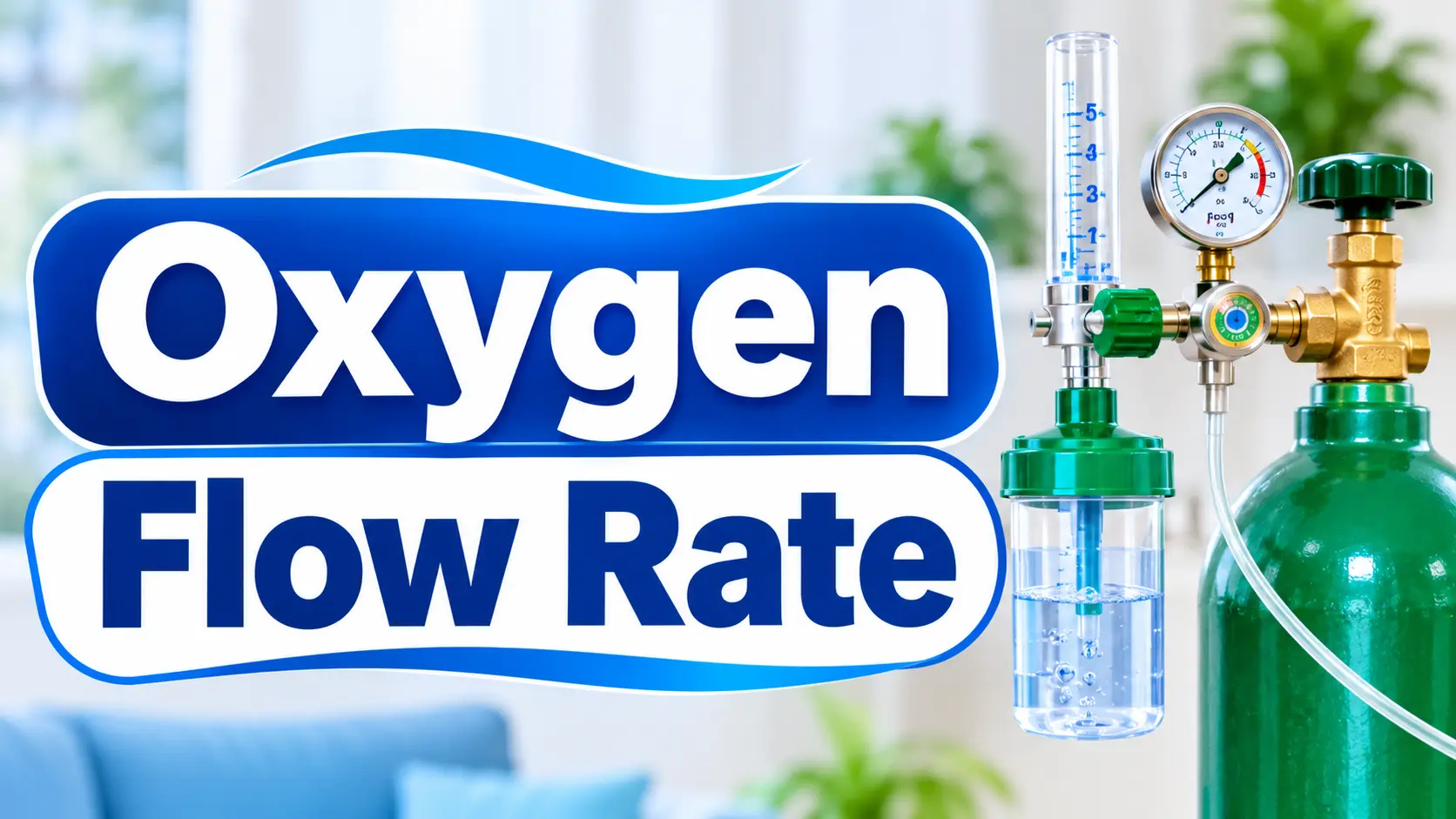
Normal Oxygen Flow Rate for Home Use: A Simple Guide
If you or a loved one has been advised to use oxygen at home, one of the first questions is: what is the normal oxygen flow rate for home use? The answer depends on the person’s health condition, oxygen level, and doctor’s prescription. This guide explains the basics in simple language.
What Is Oxygen Flow Rate (LPM)?
Oxygen flow rate is measured in liters per minute (LPM or L/min). It tells you how much oxygen the machine delivers every minute. A home oxygen concentrator usually has a dial or digital setting to adjust this flow.
Normal Oxygen Flow Rate for Home Use
Most people who use home oxygen are prescribed a flow between 1 and 5 LPM.
- 1–2 LPM: Low flow. Common for mild breathing problems or oxygen use during sleep or activity.
- 2–3 LPM: Moderate flow. Commonly used for long-term conditions like COPD.
- 4–5 LPM: Higher flow. Used when oxygen levels are lower, and usually under closer medical supervision.
Standard home concentrators generally deliver up to 5 LPM. Some models go up to 10 LPM.
Important: There is no single “correct” flow rate for everyone. The right setting is the one prescribed by your doctor.
Normal Oxygen Saturation (SpO2) Levels
A pulse oximeter shows your oxygen saturation:
- 95%–100%: Normal for most healthy people.
- 92%–94%: Slightly low. Worth monitoring and mentioning to a doctor.
- Below 90%: Low. Seek medical advice promptly.
Some people with chronic lung disease (such as COPD) may be given a lower target range, often 88%–92%, because too much oxygen can be harmful for them. Always follow your own doctor’s target.
What Does 2 LPM or 3 LPM Mean?
2 LPM means the concentrator delivers 2 liters of oxygen every minute. 3 LPM means 3 liters per minute. Neither is automatically “too much.” For many long-term oxygen users, 2–3 LPM is a common and safe prescription. It only becomes a concern if it is set higher than prescribed without medical advice.
Tips for Safe Home Oxygen Use
- Use the flow rate prescribed by your doctor only.
- Check SpO2 regularly with a pulse oximeter.
- Keep the concentrator in a well-ventilated area.
- Never smoke or use open flames near oxygen equipment.
- Keep humidifier water and nasal cannula clean.
- Keep a backup oxygen cylinder in case of power failure.
When to Call a Doctor
Seek medical help if:
- SpO2 stays below 90% even on prescribed oxygen
- You have increasing breathlessness, chest pain, or confusion
- Your lips or fingertips look blue or pale
- You feel very drowsy or have severe headaches
Final Thoughts
The normal oxygen flow rate for home use is usually between 1 and 5 LPM, but the right amount depends on your health and your doctor’s advice. Monitor your oxygen level, never change the flow on your own, and get regular check-ups.
Disclaimer: This article is for general information only and is not a substitute for professional medical advice.
FAQ
1. Is 3 LPM of oxygen a lot?
Not necessarily. 3 LPM is a moderate flow rate and is commonly prescribed for long-term oxygen therapy. Whether it is right depends on your oxygen level and condition, so follow your doctor’s prescription.
2. Is an oxygen level of 92% normal?
A normal SpO2 is usually 95%–100%, so 92% is slightly low for a healthy person. However, for people with chronic lung conditions like COPD, a target of 88%–92% can be acceptable. Check with your doctor about your personal target.
3. What is the best flow rate for an oxygen concentrator?
There is no single best rate. Most people use between 1 and 5 LPM. The best flow rate is the one that keeps your SpO2 in the range your doctor recommends.
4. What does a 2 LPM oxygen flow rate mean?
It means the machine delivers 2 liters of oxygen per minute through your nasal cannula or mask. It is a low-to-moderate setting that many people use for daily or night-time oxygen support.
5. Can I change the oxygen flow rate myself?
No. Too little oxygen can leave you short of oxygen, and too much can be harmful for some patients. Change the setting only on your doctor’s advice.
6. How often should I check my oxygen level at home?
Your doctor will advise this. Many people check once or twice a day, and more often if they feel unwell. Use a good-quality pulse oximeter on a warm, clean finger.
7. Can a home oxygen concentrator run 24 hours?
Most medical-grade concentrators are designed for continuous use, but they need regular filter cleaning and rest in a ventilated area. Always follow the manufacturer’s guidance.
